 Hannu Happonen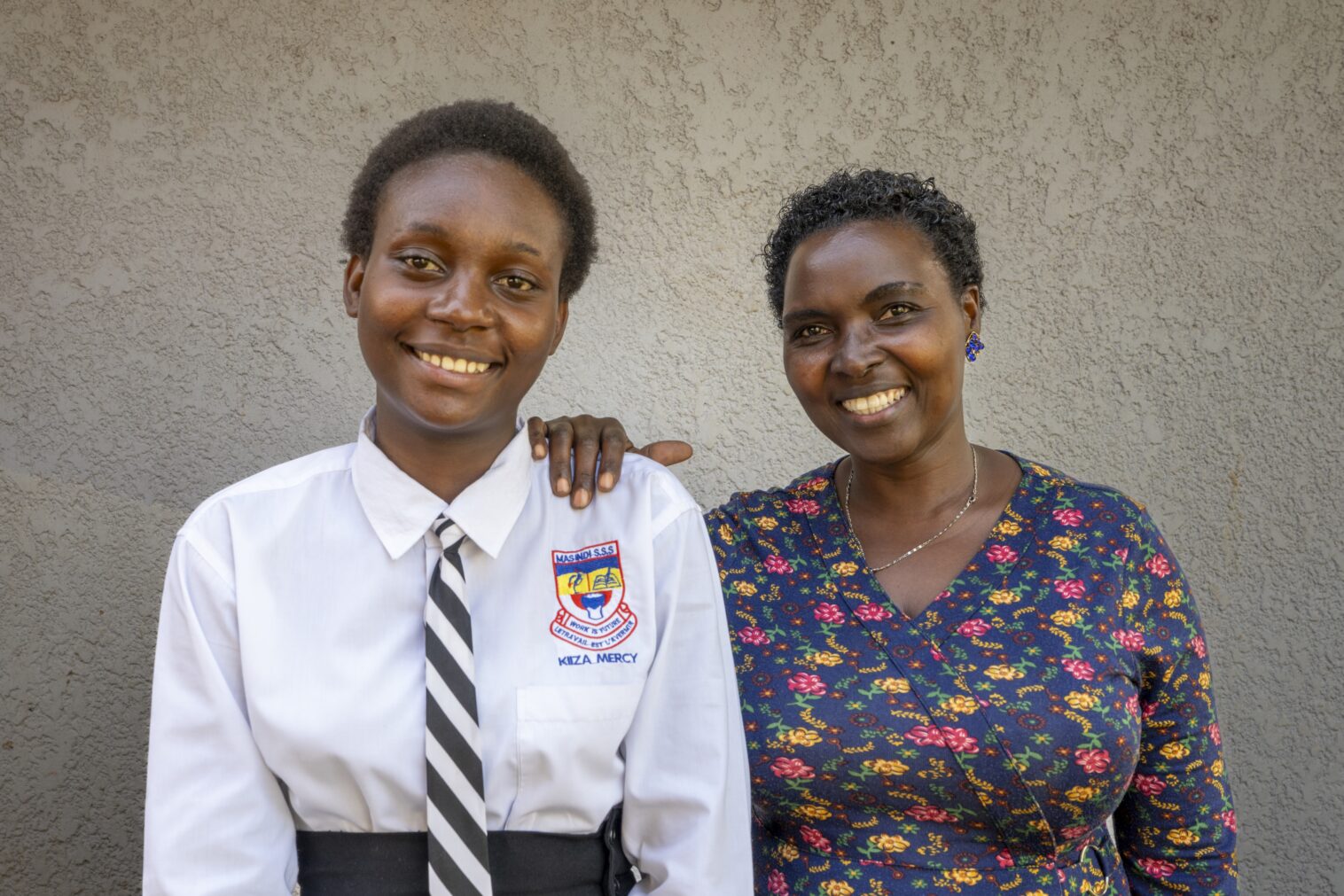
Eighteen-year-old Mercy Kiiza took part in a workshop supported by Fida and was inspired to help girls in her community. Today, she is a peer educator, challenging ideas about what girls can achieve.
Mercy Kiiza sits in the schoolyard of Masindi Secondary School in western Uganda, talking with her teacher, Jane Mary Nakyambadde. Mercy is approaching the end of her secondary education, and she already has plans for the future.
– I like expressing ideas and discussing important issues. In the future, I dream of becoming a lawyer to help girls, she says with determination.
Over the past few years, Mercy has found her voice – and the courage to use it not only for herself, but also for other young people.
The change began in 2023, when she took part in a Fida-supported workshop together with many other girls her age. The sessions on menstrual health made a particular impression on her.
– I became interested in helping girls and young people in my community because the challenges we discussed in the workshop were the same challenges people were facing in my community..
Menstruation can keep girls out of school
In Mercy’s home area Masindi, continuing education through secondary school is not a given for every young person. According to Uganda’s 2024 census, nearly one in three 13–17-year-olds in Masindi were out of school.
For girls in particular, education may be interrupted by teenage pregnancy or early marriage.
Mercy’s teacher, Jane Mary Nakyambadde, sees these challenges in her work.
– Many of these children grow up in poor families, Jane Mary explains. – Some cannot afford even exercise books. Others drop out because they fear school fees.
Girls often feel lonely during their menstrual cycle. Many feel that there is something wrong with them.
Mercy Kiiza, student & Shine Club -member.
It is important to invest in girls and menstrual health because we can prevent many health-related problems.
Menstruation can also cause girls to miss several days of school each month. Not every family can afford menstrual products, and a lack of accurate information adds to the challenges. As a result, some girls stay home during their periods.
– Girls often feel lonely during their menstrual cycle. Many feel that there is something wrong with them, Mercy says.
A lack of safe menstrual products can also pose serious health risks.
– It is important to invest in girls and menstrual health because we can prevent many health-related problems. Some girls, for example, use sand during menstruation, which can harm their bodies, Mercy explains.
Mercy points out that access to safe menstrual products also means that girls do not have to stay at home during their periods.
– They can attend school as if it were a normal day..
Knowledge turned into action
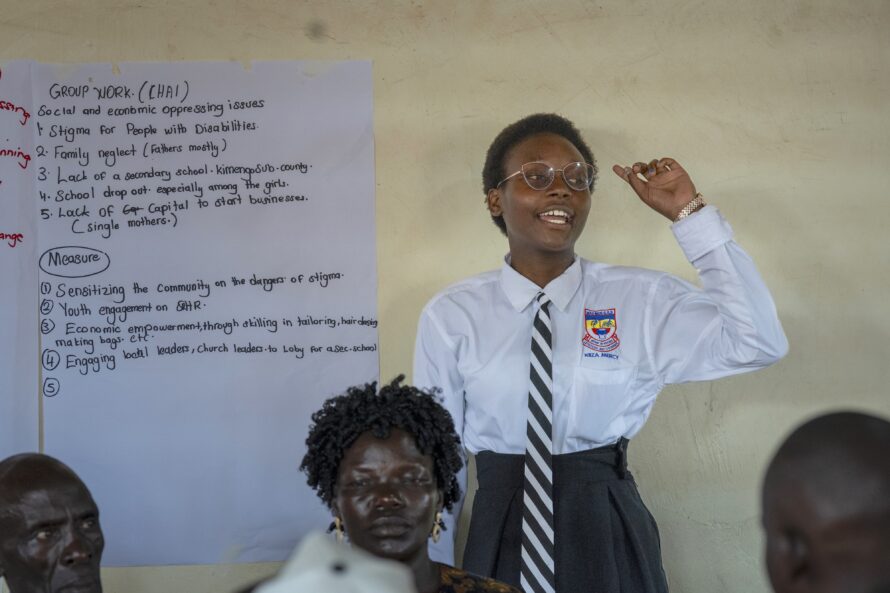
– When I finish my studies, I would love to create a counselling centre where I could support different people, especially young girls.
After the workshop, the young people did not leave what they had learned behind. They started a project to make reusable menstrual pads from cotton and distribute them to girls who needed them.
A Shine Club was also established at the school. Through the club, young people learn about menstrual health, sexual and reproductive health and rights, and the prevention of gender-based violence.
Boys have also become involved.
Mercy believes the club has helped boys better understand what girls experience, including during menstruation.
– Some of the boys have been able to help their sisters at home, as well as their neighbours and other people in their communities, Mercy says.
Young people supporting one another
The school leadership has given the young people in the Shine Club responsibility for peer-support sessions. Students have opportunities to talk about their concerns with other youth, which can make discussing difficult subjects easier.
The young people have also become a link between students and teachers.
– Students tell us their problems, and we take their concerns to the school administration. It has helped us build strong relationships in the school.
Girls also have their own Girl Talk sessions. They discuss menstrual health, sexual and reproductive health, and gender stereotypes.
The change is already visible, says Jane Mary.
– Now we have girls who can stand up and say no to gender-based violence and gender stereotypes. Older students also share what they have learned with younger students.
Girls can become leaders too
Traditional attitudes still limit the opportunities available to girls.
Mercy describes one of the greatest challenges as “fighting culture with reality”.
– In some cultures, girls feel that they come to school just to learn how to read, and then they get married.
The Shine Club challenges these ideas by showing girls different possibilities for their future – including examples of women who have become leaders and influential members of society.
You can do it despite your environment. Challenges will always be there, but you can make it. It is about your heart and your self-confidence.
Mercy Kiiza, student & Shine Club -member
Mercy says girls can also find it difficult to speak up for themselves.
– They are looked down on because they are girls. They feel that a man can represent their problems better.
Mercy herself leads by example. She supports her fellow students and reaches out to girls who have dropped out of school, encouraging them to continue their education.
Her message to other girls who want to make a difference is clear:
– You can do it despite your environment. Challenges will always be there, but you can make it. It is about your heart and your self-confidence.
Finally, Mercy has a message for those in Finland who have supported the work in Uganda.
– I would love to thank all of you, because what you have done for us in Uganda has meant a lot. We have been able to overcome the insecurities that come from our cultures and to build our futures.
She says the workshops have given young people tools that they can use not only at school, but also in their communities.
– What we have learned has helped us overcome the everyday challenges that our friends and community members face. Even though we are still students ourselves, we have been able to be a blessing to the communities we come from.
——-
Shine Clubs are part of the development cooperation carried out by Fida and the Pentecostal Churches of Uganda (PCU). When Mercy participated in the activities in Masindi, the clubs reached around 200 students in two schools. Since then, the programme has expanded to new areas and schools. Today, Shine Clubs operate in ten schools, mainly in Yumbe and the Bidi Bidi refugee settlement, reaching approximately 3,500 children and young people.
Fida’s country programme in Uganda is funded by the Ministry for Foreign Affairs of Finland.