
Siirry sisältöön
Categories NewsTopics Development cooperationKirjoitettu

Changing Attitudes in Tanzania Bring More Children with Disabilities to School

Henkilökuvamalli, graafinen. Hannu Happonen
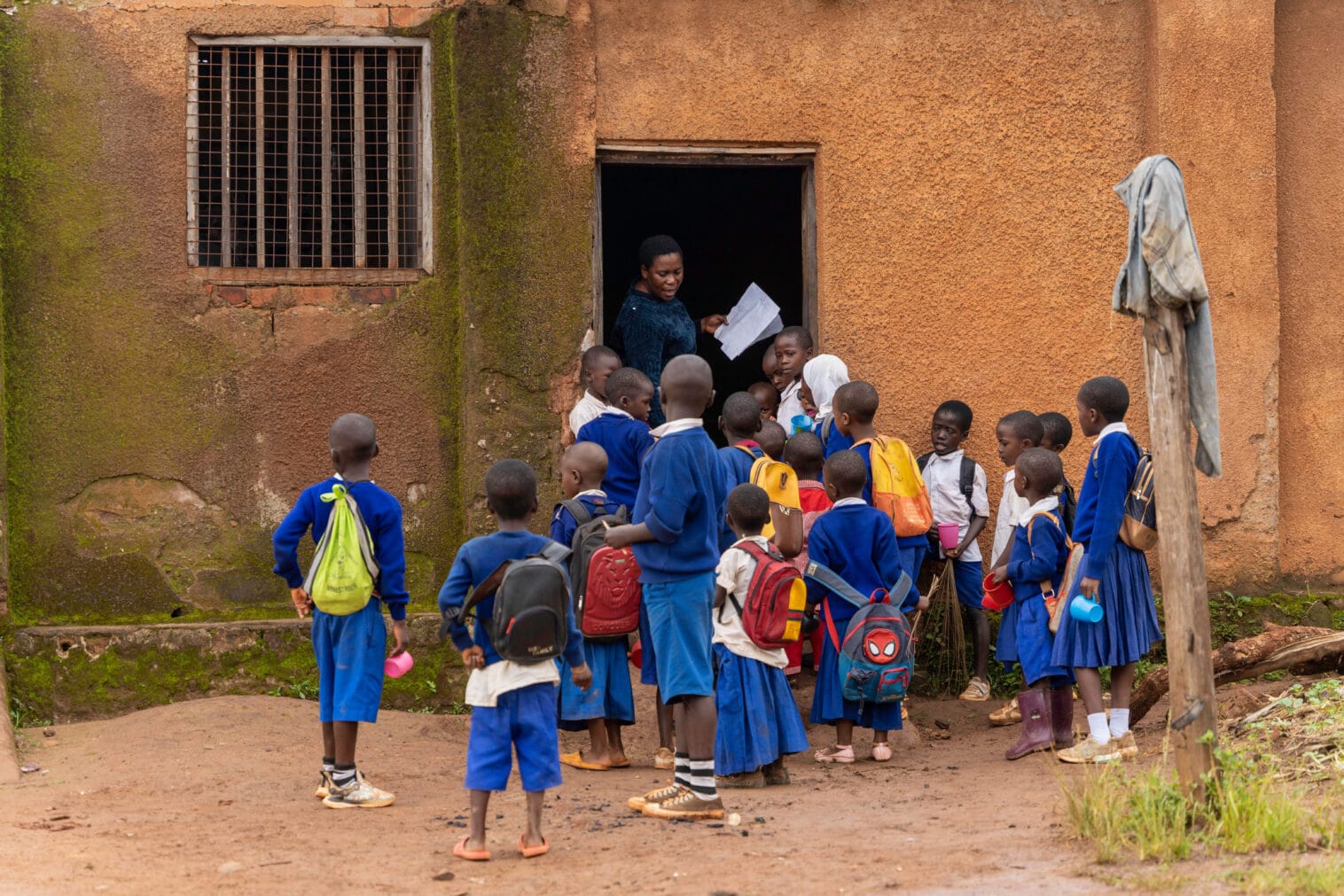
Oppilaat ovat kokoontuneet peruskoulun luokan oven eteen Tansaniassa.

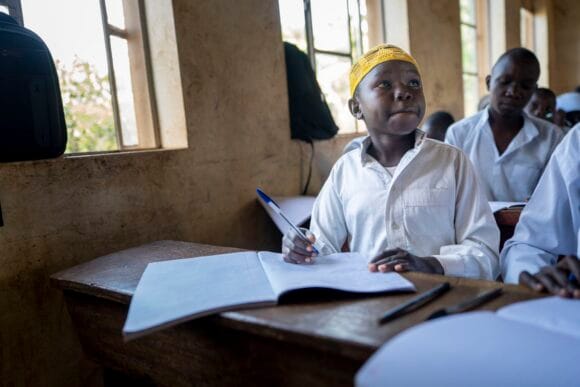
At Kalema Primary School in Tanzania, one in six pupils has a disability. The school is a great example of how attitudes toward children with disabilities are becoming more positive.

– Previously, children with disabilities rarely had the chance to attend school. They were not always considered capable or worthy of learning, says Mariam Abdallah Kondo, headteacher of Kalema School.

The school is located in Kasulussa in northwestern Tanzania, near the town of Kigoma and Lake Tanganyika. The Democratic Republic of the Congo lies to the west of the lake, and Burundi is to the north.

At Kalema School, 349 children are enrolled, of whom 57 have disabilities – around 16 percent of the pupils. By comparison, in 2021 only about 2.3 percent of children and youth in Tanzania had disabilities.

According to the headteacher, students with disabilities are an integral part of the school community.

– We cannot ignore them. They have the right to belong and to feel part of the group. They need love and the company of other children, she says.
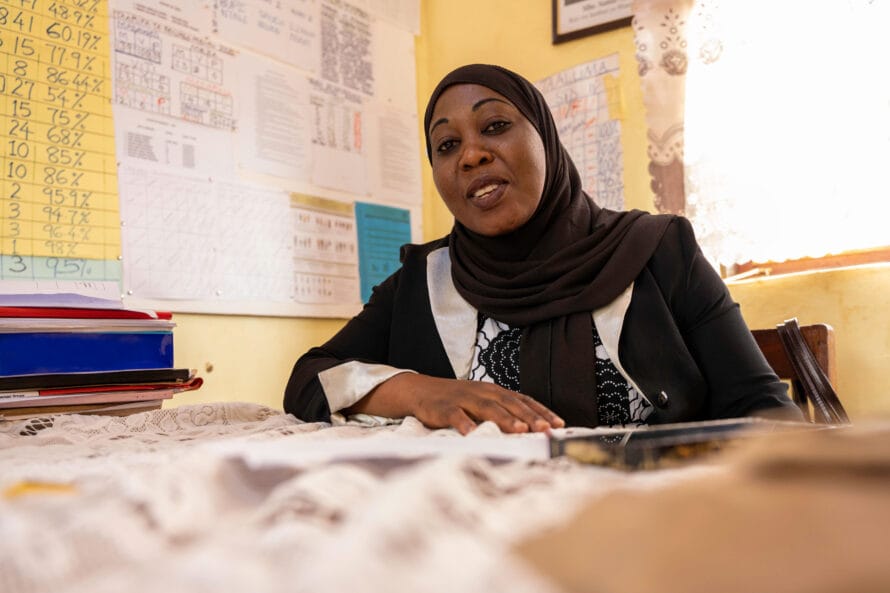
Tansanialaisen peruskoulun rehtori työhuoneessaan työpöydän ääressä.
Mariam Abdallah Kondo, headteacher of Kalema School, has witnessed a shift in attitudes toward the education of children with disabilities. The change has occurred among both teachers and families.

– At home, children would not learn or develop in the same way. From preschool onwards, they acquire important basic skills: personal hygiene, washing clothes, and even collecting rainwater for plants during the dry season by digging small pits in the ground.

Efforts to Promote the Rights of Children with Disabilities are Yielding Results

Kalema School is an example of the significant shift in attitudes that has taken place in Tanzania as a result of years of dedicated work. Fida collaborates with the Free Pentecostal Church of Tanzania (FPCT), the government, as well as teachers’ and parents’ associations to ensure the rights of children with disabilities are upheld.

Fida’s Tunandoto country program (“We Have a Dream”) has raised awareness in communities and promoted the rights of persons with disabilities at the legislative level. The results are clear: more and more children with disabilities are now able to attend school.

Thanks to the work of Fida and FPCT, many primary schools already provide inclusive teaching and facilities for children with disabilities. The challenge remains to extend inclusive education beyond primary school to the entire education system, including vocational institutions.

When a Grandchild Is Born with a Disability

I meet a grandfather from Kigoma. Last year, his son and daughter-in-law had a child who was diagnosed after birth with a rare genetic condition called cartilage-hair hypoplasia.

– What once seemed distant suddenly became very close. My first question was why. Why did this happen in my family? Why was my granddaughter born with a disability? I had to reflect on God’s wisdom and justice, the grandfather says.

The condition affects the child’s bone and hair development. She is likely to be short in stature and may face various health challenges. Yet her parents received the news with determination. They want to do everything possible to ensure their daughter’s life is as good as it can be.

– When I spoke with them, I realized that above all, the child is a beloved gift to them. How could I see her any differently? She is God’s wonderful child, just like any other, the grandfather says.

Finally, he returns to the words of the Bible: “God saw all that he had made, and it was very good.”

– My granddaughter is God’s gift to us, he summarizes the family’s attitude.

The work is supported from Finland’s development cooperation funds.
Read More

News & Articles

Categories Article
Kolme lasta nauraa
Read more

International Roma Day: Five Stories of Hope and Change

For decades, Fida and Elämä ja Valo have worked together to support Roma communities across Europe. In honour of International Roma Day, we have gathered five encouraging stories of change from different Roma communities.
Categories Artikkeli, Article
Tyttö selaa oppikirjaa Romanatin peruskoulussa Tigrayssa, Etiopiassa.
Read more

Echoes of War: The Lasting Impact of Conflict on Ethiopia’s Children

Ethiopia’s history has been marked by recurring conflicts that have left deep scars on society. Hannu Happonen’s report from Tigray opens a window into suffering that remained hidden from the outside world for two years.
Categories Article
Ryhmä romanitaustaisia opiskelijoita
Read more

The HERO project gave courage and a new direction

Fida’s training programme for Roma participants strengthens skills for employment, wellbeing, and parenting. New group started training this week in Lahti region.
Categories Article
Nuoria naisia istuu ja nojaa rakennusta vasten. Keskimmäisellä nuorella naisella on nalle sylissä.
Read more

Four years of fear – In Ukraine, people pray for a night without bombings

For nearly four years now, Ukrainian families have been raising their children under rockets and bombardments. In Zaporizhzhia, Fida supports families living in the midst of crisis so that they can hold on to hope.
Categories News
Read more

Four Years of War – A Plea from Ukrainian Christians: Please Do Not Forget Us!

According to Pastor Juri Kulakevich, who is responsible for international relations in the Ukrainian Pentecostal Church, what is happening in Ukraine is not merely a prolonged war, but deliberate terror directed at the civilian population.
Categories News
Alakoulun oppilaita ruskeat koulupuvut päällään Burundissa.
Read more

External Evaluation Confirms: Fida’s Development Cooperation Strengthened Children’s and Youth’s Rights in Challenging Contexts

Especially girls’ school attendance and the inclusion of children with disabilities have improved.