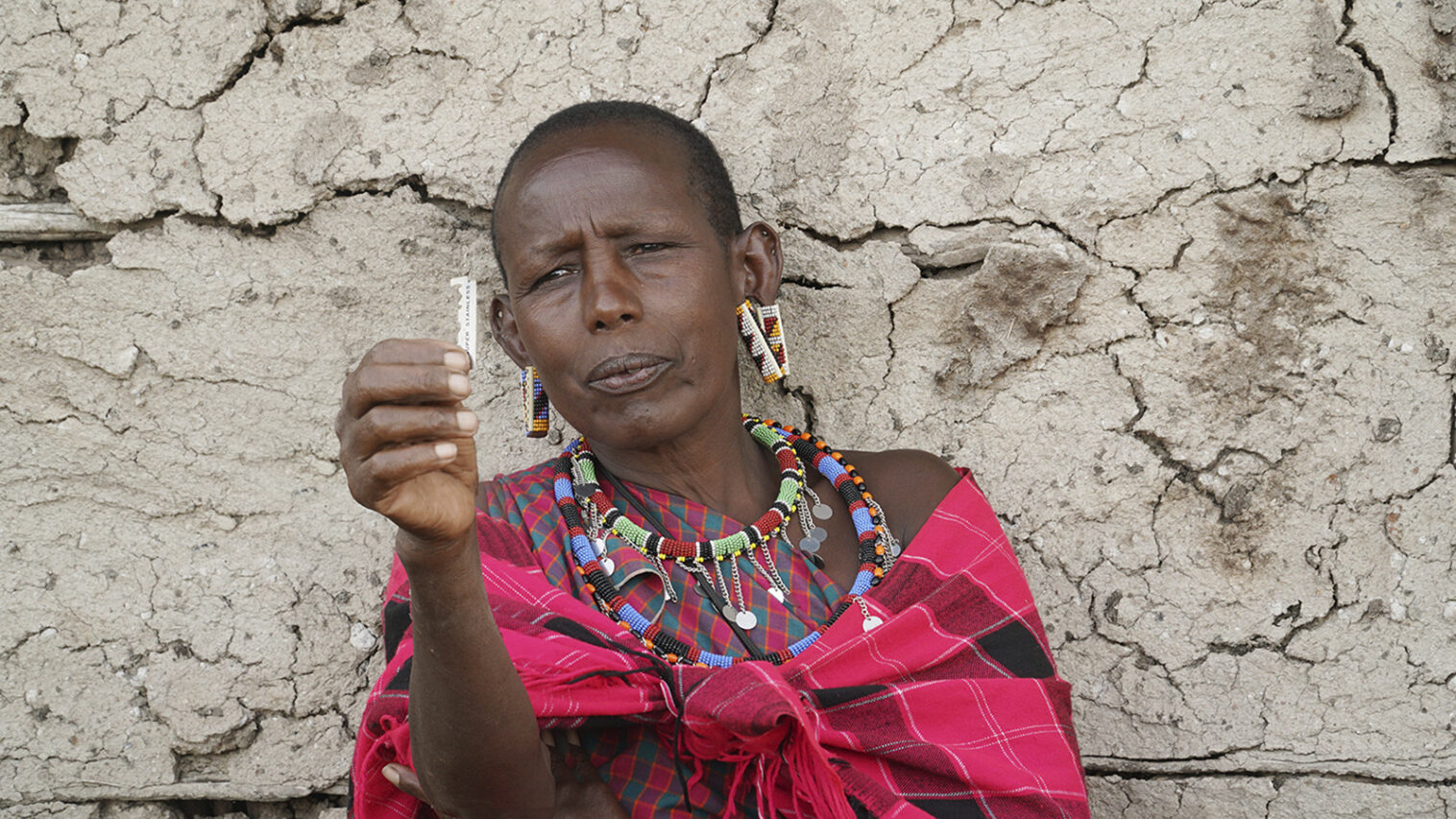
Melita Koye, from Kenya, gave up on the practice of female genital mutilation (FGM) after understanding its harmfulness. Today, she does awareness work against FMG, supported by her church and Fida.
My name is Melita Koye. I live in the remote mountain village of Loita, in Kenya. I belong to the Maasai community. We maasai have many old traditions and rituals.
One of them is female genital mutilation, which has been done in our culture for hundreds of years. Although it is now illegal, it is still commonly practised not only among the Maasai, but other tribes as well.
When I was young, I often assisted older women in our village to perform this ancient ritual. I held on to the hands and feet of the girls wringing in pain, while their genitals were cut with a razor blade. I thought I was helping girls become real women. I thought that after circumcision, they would be ready for marriage.
By working with a circumciser, I eventually qualified to be a circumciser, whom we Maasais call enkamuratani. I’ve cut dozens of girls.
I knew that I could no longer pretend, but would have to stop circumcising altogether.
I heard about the local church from my daughter and started going there. The pastor talked about the many harmful side effects of the circumcision ritual. When I heard what physical and psychological damage it causes to girls, I realized it was wrong.
The next time I was performing a ritual, I pretended to cut a girl, even though I didn’t really touch her. I knew that I could no longer pretend, but would have to stop circumcising altogether.
I now attend church regularly. I completed a training, where I learned more about the dangers of circumcising girls. Afterwards, I was elected as a representative of girls and women in my community.
I now raise awareness with my church and Fida to eliminate harmful circumcision. I also tour other Maasai communities to talk about the harmfulness of the ritual. I wish our children didn’t have to go through mutilation anymore.
Text and photo: Hannu Happonen