 Ninarose Koponen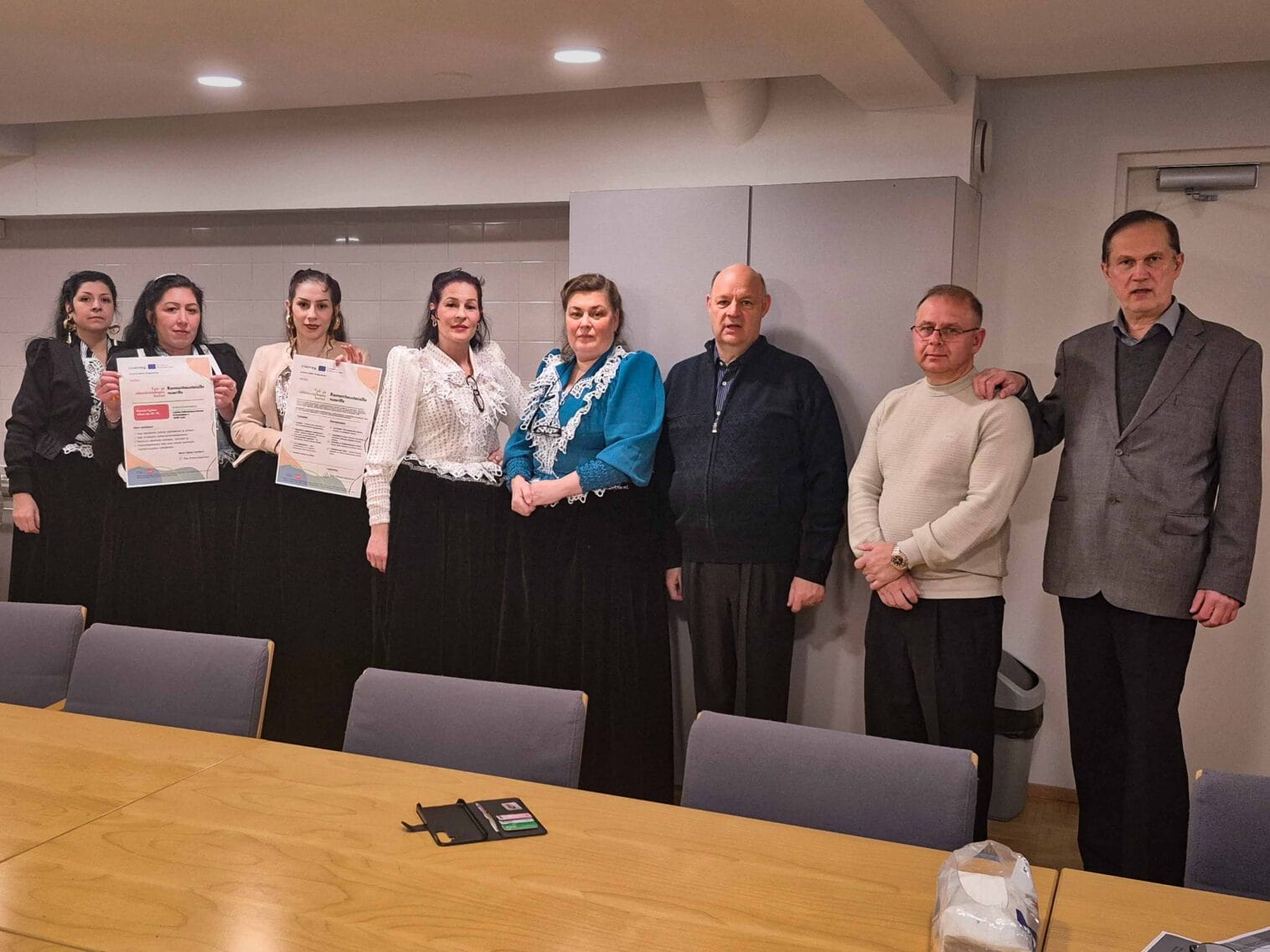
Fida’s training programme for Roma participants strengthens skills for employment, wellbeing, and parenting. New group started training this week in Lahti region.
Fida is currently implementing the HERO training programme for Roma communities in both Finland and Latvia. The programme was designed to respond to challenges that many Roma individuals face in working life. While education and employment are central themes, the training takes a holistic approach—covering life skills from personal finances to health and parenting.
The first groups in both countries have now completed the training. A new group has already started in Latvia, and a second group in Lahti is beginning this week.
In the first group, a total of 15 participants were selected for the EU-funded programme: five from Finland and ten from Latvia. The group included both young adults who have just reached adulthood and participants in midlife.
One of the participants is Jasmin Valentin, 43, from Nastola. She initially joined out of curiosity. Her daily life as a foster parent is busy, but the opportunity to support others and meet new people inspired her to take part.
– I’m a mother of two adult children and a foster parent. I first joined to help with the training—opening doors and making sure everyone was there. That’s how it all started.
You have to let go of old ways of thinking and dare to dream.
HERO student Jasmin Valentin
From the beginning, Jasmin felt that being involved was meaningful. The group atmosphere was warm, and the programme included visits to different organisations in Lahti—from the Fellmannia partnership building to the Lahti Diaconia Foundation.
– I really enjoyed it. We had great facilitators, and I learned something new every time.
For Jasmin, some of the most impactful sessions were led by the Finnish Roma Forum and focused on identity.
– They were about understanding who you are, recognising old patterns of thinking, and realising: I can do this. I am capable.
She highlights how the training emphasised the importance of protecting identity and the power of everyday words.
– You should never tell a child they can’t do something or that they are bad. If a child constantly hears negative words, they will carry that with them. Instead, you need to encourage them—say that they can learn, even if they struggle. Children need affirmation.
She gained much for her own family life.
– It matters what kind of parents we are. It’s important to learn how to motivate yourself and not underestimate your own abilities. You have to let go of old ways of thinking and dare to dream.
Barriers in job seeking
According to Tino Varjola, a deacon and pastor from Lahti who helped design the training, employment remains a major challenge for many Roma people.
– We’ve seen that even getting an internship can be difficult. Everything may sound promising over the phone, but when a young person arrives for the interview, the position is suddenly no longer available. And even when they do get a placement, they may experience exclusion. Sometimes just having a recognisably Roma name can prevent someone from being invited to an interview.
These experiences were openly discussed in the group.
– Many participants had applied for jobs and felt discouraged. That’s why we also talked about entrepreneurship—what it takes to start a business and where to find support.
In Latvia, one young man shared that he had been developing a business idea for a day centre for elderly people but did not know how to move forward.
Through the training, he received practical guidance and is now taking steps to develop his idea further, says trainer and project coordinator Keijo Baltzar.
Jasmin Valentin has also been considering entrepreneurship. She has led sewing courses and closely followed how Roma fashion is evolving.
– I’m interested in designing Roma clothing and importing materials from abroad. There are fabrics you simply can’t find here, and people are already looking for them elsewhere.
She describes how Roma fashion has recently changed—sleeves have become narrower, skirts shorter, and colour palettes more adventurous, with the introduction of pastel tones.
A community-based training model
Tino Varjola previously worked for years in Fida’s programme in India, where he became familiar with community-based training approaches used in some of Asia’s largest informal settlements.
– What inspired me most was the participatory and practical way of learning. Ordinary people were equipped with tools to strengthen their everyday life skills.
He has brought many of these insights into the HERO project. The training was developed in collaboration with multiple partners and is structured into modules addressing key areas of life—from health and personal finances to employment.
Both Roma and non-Roma professionals serve as trainers. One key partner is Life & Light Finland, a pioneering organisation in Roma work and a long-term partner of Fida.
– It was important that trainers came from both communities, says Varjola, who is himself of Roma background and has taught in both Lahti and Latvia.
In Latvia, the training takes place in the Valmiera region and is implemented by co-organising partner organisation,Valmiera Development Agency that has extensive experience in educational projects.
Strengthening identity as a resource
”We are Roma, but we are also Finnish. A strong Finnish identity and appreciation of our own culture are not mutually exclusive.”
Trainer, pastor Tino Varjola
The training begins with a focus on holistic wellbeing, encouraging participants to reflect on what a good life looks like and how it is built.
– One of the central themes is identity. We discussed dual identity: we are Roma, but also Finnish. These identities can strengthen one another. We explored the strengths within Roma culture and how they can be used constructively, as well as patterns that may need to be unlearned, Varjola explains.
He emphasises the importance of recognising one’s ability to influence one’s own life. Even small choices can have a significant cumulative impact.
Keijo Baltzar, Fida’s project coordinator, shares that one participant in Latvia realised for the first time during the training that a good life might also be possible for him. For many, this idea had previously felt out of reach.
Positive feedback and growing impact
Feedback from participants in both Finland and Latvia has been very positive. The programme has been particularly appreciated for its practical approach, clarity, and its ability to inspire hope.
There are signs of positive change. The level of education among Roma communities is gradually rising, participation in secondary education is increasing, and Roma youth are being better received in workplaces.
Tino Varjola
In Latvia, challenges remain significant. Around 70 percent of Roma are unemployed, and only 17 percent have completed education beyond primary level. Discrimination and social challenges continue to hinder access to employment.
– In Latvia, opportunities for Roma are clearly more limited than for the majority population. Prejudice still blocks progress, Baltzar says.
While similar statistics are not collected in Finland based on ethnic background, prejudice and stereotypes still exist. At the same time, there are encouraging developments, as Varjola notes.
The level of education among Roma communities is gradually rising, participation in secondary education is increasing, and Roma youth are being better received in workplaces.
————-
HERO is part of the Interreg Central Baltic Programme (2021–2027), co-funded by the European Union. The programme promotes regional cooperation across the Baltic Sea region. HERO is implemented by Fida and the Valmiera Development Agency.