 Joonas Haverinen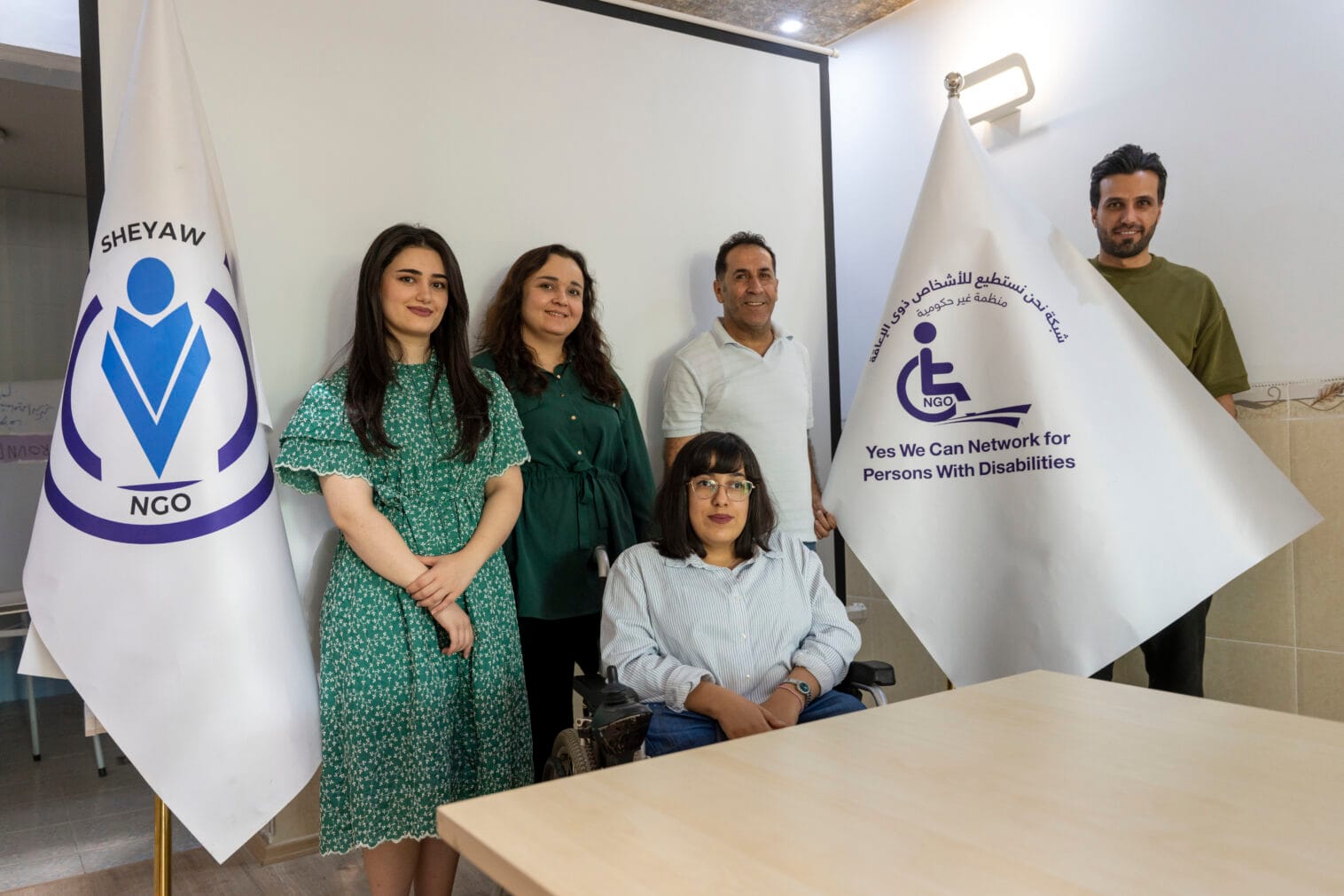
Unemployment is widespread in Iraq and affects people with disabilities in particular. Fida’s partner organization Sheyaw has been advancing the rights of young people with disabilities, and the results are already visible after just a few years of cooperation.
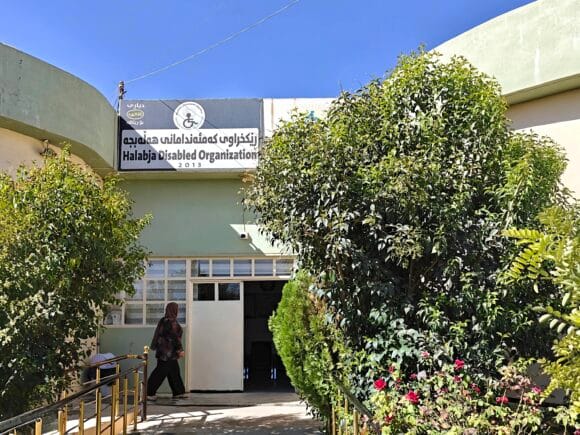
Sheyaw (English: “suitable”) is an organisation focused on strengthening employment opportunities and rights for people with disabilities and recent graduates in Iraq. The organization was founded in 2019 with the idea that people with disabilities could become more active members of society and their own communities. Cooperation with Fida began in 2021, when the organisation was still in its early stages.
Iraq has a population of about 46 million people, of whom an estimated 12–15% have disabilities. The high proportion is partly due to the country’s violent and war-torn recent history. Unemployment is widespread, affecting both people with and without disabilities.
Sheyaw sought to address this challenge by developing a programme that promotes equal employment opportunities for university graduates.
– Working with Fida during the first years of our organisation was an excellent time to develop ourselves. Among other things, we gained skills in engaging young people in our activities, says Salar Ahmed, the organisation’s Executive Director.
The Power of Networks
One of the most significant achievements of the cooperation between Fida and Sheyaw is the Yes We Can network, founded and led by Sheyaw. The network brings together people with disabilities and 57 Iraqi disability organizations. It now includes 120,000 people with disabilities across Iraq.
The Yes We Can network promotes employment for people with disabilities by engaging with employers in both the public and private sectors. In practice, this involves meetings with employers and raising awareness about the rights and skills of employees with disabilities.
Under Iraqi law, at least 5% of public sector employees and 3% of private sector employees should be people with disabilities — but in practice, this is not yet realised.
– The Yes We Can network serves as a link between people with disabilities and employers in both the public and private sectors, explains Shanaw Peshraw, chairperson of the network in the city of Sulaymaniyah.
We want to change attitudes and culture. When the culture changes, legal reforms and the promotion of employment become easier.
Shanaw Peshraw, Iraq
Peshraw works full-time as a lawyer. He is blind and says this has been a major challenge during his 12-year career. His own situation is now good, but he hopes that other people with disabilities can have the same opportunities.
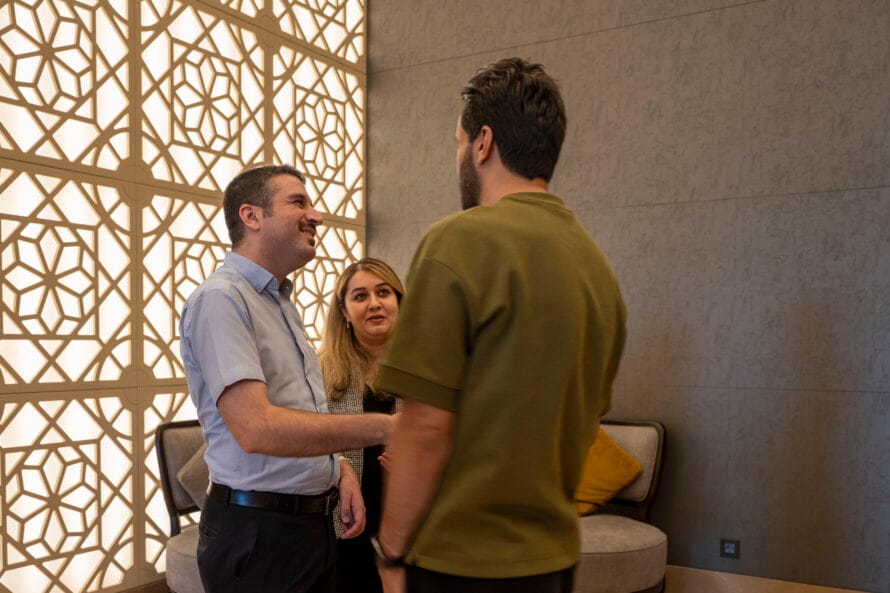
– Through the Yes We Can network, we want to change attitudes and culture. When the culture changes, legal reforms and the promotion of employment become easier, Peshraw says.
The network’s approach is to first introduce itself to employers. It then organises training on how people with disabilities should be treated as employees.
– In Sulaymaniyah, we have compiled the résumés of 100 people with disabilities, and we inform employers that we have qualified candidates for the jobs they offer, Peshraw explains.
The Status of Women with Disabilities
One concrete outcome of the Yes We Can network is that women with disabilities have become active advocates toward the private sector. They have communicated to companies about the rights and skills of people with disabilities — opening the door to employment for many.
It is also important to strengthen the confidence and self-belief of young people with disabilities. Many women with disabilities fear entering the workforce — and often that fear is justified.
– Women with disabilities face significant sexual harassment and abuse, even within disability organizations. That is why, together with our international partners and the Yes We Can network, we have worked to ensure that all disability organizations have their own safeguarding policies to protect employees from harassment, says Salar Ahmed.
Bana Mustafa, employed by Sheyaw, explains that before getting a job, she spent most of her time at home — simply because work opportunities were not available.
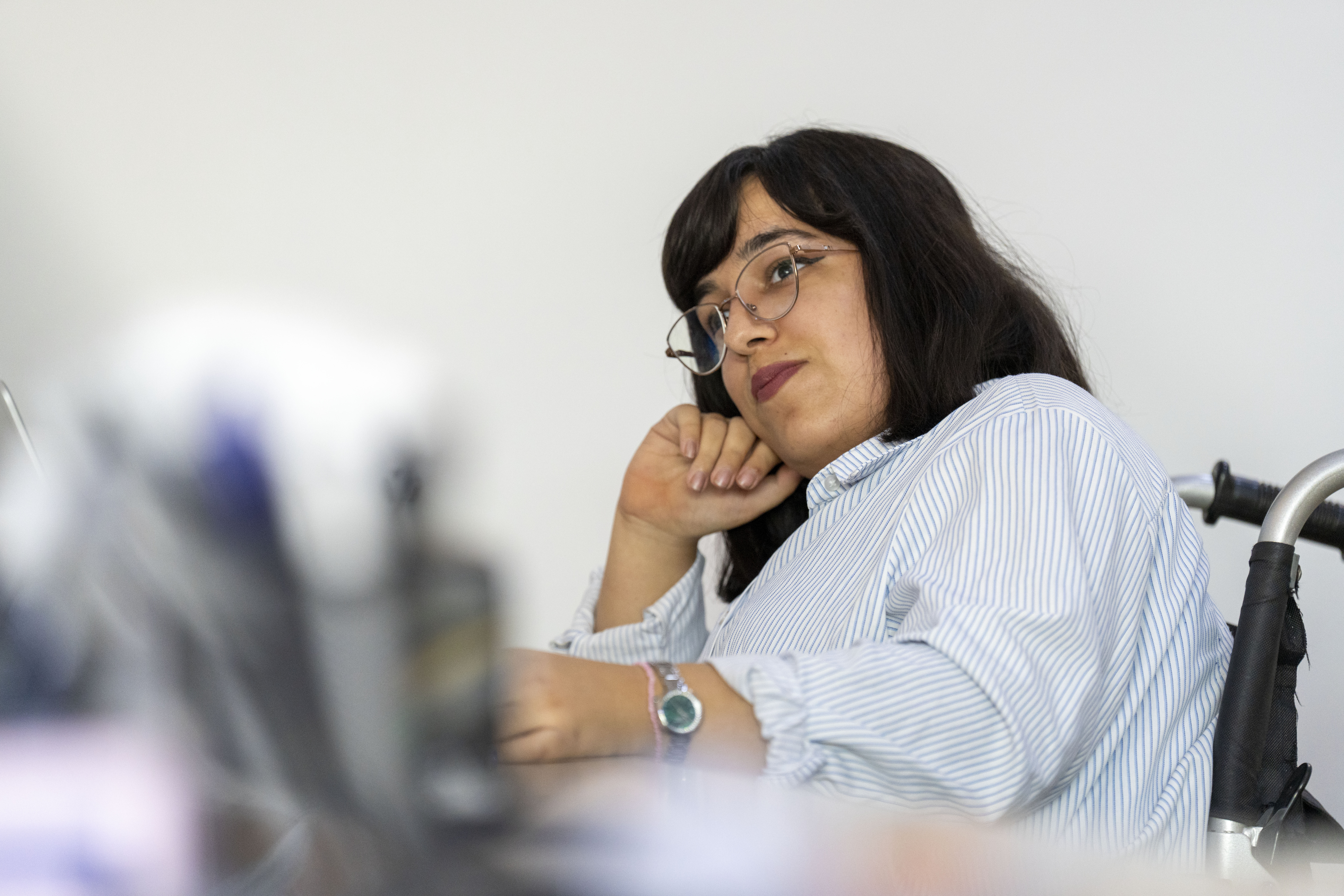
– When I attended the training organized by Sheyaw, I realized that having a disability should not limit one’s life, Mustafa says.
Now she trains others herself and advocates to policymakers to secure a quota for women with disabilities in the workforce.
Climate Change and Refugees
Another example of a young person supported by Sheyaw is Hella Jalal: she started as an intern in the organisation and has grown into a respected expert in just a few years.
– Currently, I conduct research on the impacts of climate change on people with disabilities in Iraq. In 2023, I had the opportunity to represent young Iraqis at the UN COP28 climate conference, Jalal says.
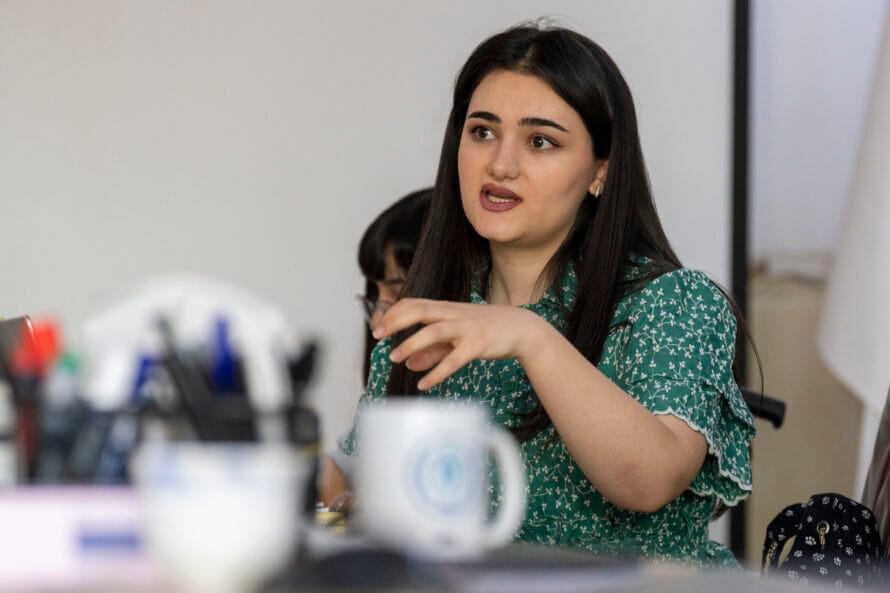
Stera Ahmed, originally from Raqqa, Syria, recounts having lived for two years under the rule of the extremist group ISIS before being forced to flee her beloved hometown.
– Syrian refugees face difficulties accessing education and entering the workforce in Iraq, she says.
– Through my work with Sheyaw, I am able to advocate for better opportunities for people who have fled from Syria, Ahmed summarizes.
Recognition from Policymakers
In just a few years, Sheyaw has become a respected expert on disability issues in Iraq. Its standing is illustrated by the fact that the Kurdistan Ministry of Social Affairs requested the organisation’s input on a new disability law.

As one concrete result of their advocacy work, Executive Director Salar Ahmed mentions a case where people of short stature were not previously classified as covered by disability legislation.
– We lobbied the Ministry of Social Affairs, and as a result of our work, short stature was added to the law, Ahmed says happily.
Fida’s Programme Ends, but the Work Continues
Fida’s development cooperation country programme in Iraq ended at the end of 2025. The cooperation, which began in 2021 with a disability organisation that was still in its infancy, has produced significant results in a short period of time.
– We are already at the stage where we are reaping the fruits of our labor, but we still have even bigger goals for the future, Ahmed says.
The Disability Act and quotas for employers are in place. The next step is to fill the quotas and for those responsible to take responsibility.
– Fida lit our torch. Although we mourn the end of the cooperation, we understand that it is part of life. Our work continues, Ahmed affirms.
Sheyaw has already collaborated with Germans and the World Vision organisation, so the future and continuity of the work look promising.
The work has been supported by Finnish development cooperation funds.
Photos: Hannu Happonen.