 Hannu Happonen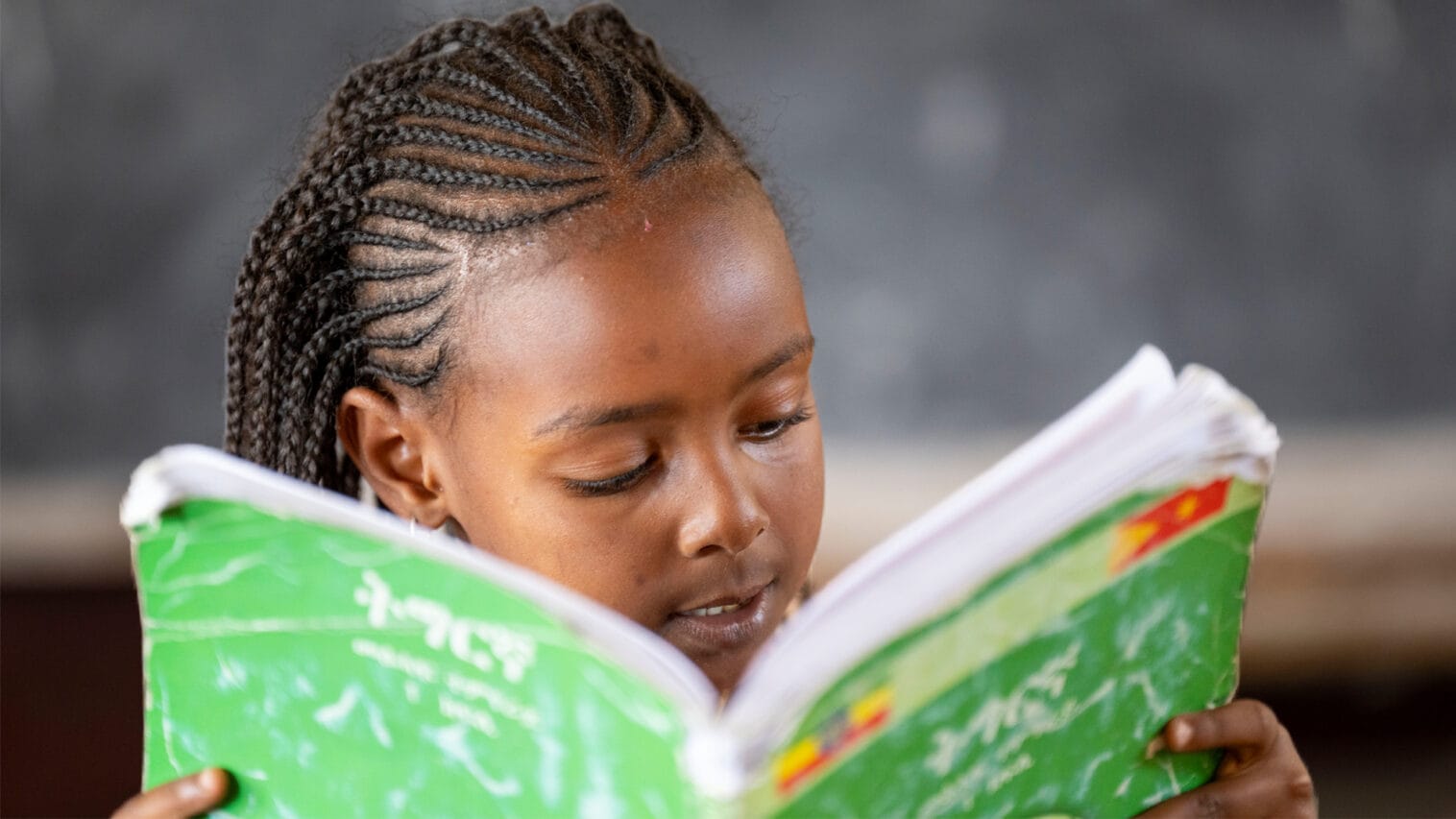
Ethiopia’s history has been marked by recurring conflicts that have left deep scars on society. Hannu Happonen’s report from Tigray opens a window into suffering that remained hidden from the outside world for two years.
Visiting Ethiopia evokes a deep sense of sorrow and unease. Despite its vast population and rich cultural heritage, the country remains one of Africa’s poorest, its path marked by a long history of conflict.
Our visit to Ethiopia included plans to travel to the Tigray Region – Ethiopia’s northernmost state, bordered by Eritrea, Sudan, and the regions of Amhara and Afar. With a population of over 7 million, its capital, Mekele, was our intended destination.
The devastating Tigray War (2020–2022) has been one of the most serious yet least reported conflicts in recent years.
The humanitarian toll of the Tigray conflict remains heavy, with deep-rooted tensions still simmering.
Hannu Happonen
The region was almost completely cut off from the outside world: phone and internet connections were shut down, banks were closed, and access to electricity and fuel was interrupted.
Humanitarian access was restricted, and it was also difficult for the media to enter the area. In practice, millions of people were left without information and basic services for more than two years.
Though a peace agreement was eventually signed, the humanitarian toll of the Tigray conflict remains heavy, with deep-rooted tensions still simmering.
As a result of the war, the healthcare system collapsed, infrastructure was damaged, and people trapped in the area were pushed to the brink of starvation.
The war has had a particularly severe impact on children in Tigray. Many have faced displacement, hunger, interrupted education, and psychological trauma. Countless children have witnessed violence, lost family members, or experienced direct abuse – leaving them at risk of anxiety, depression, and post-traumatic stress, often without access to mental health support.
Schools in Tigray were turned into instruments of war
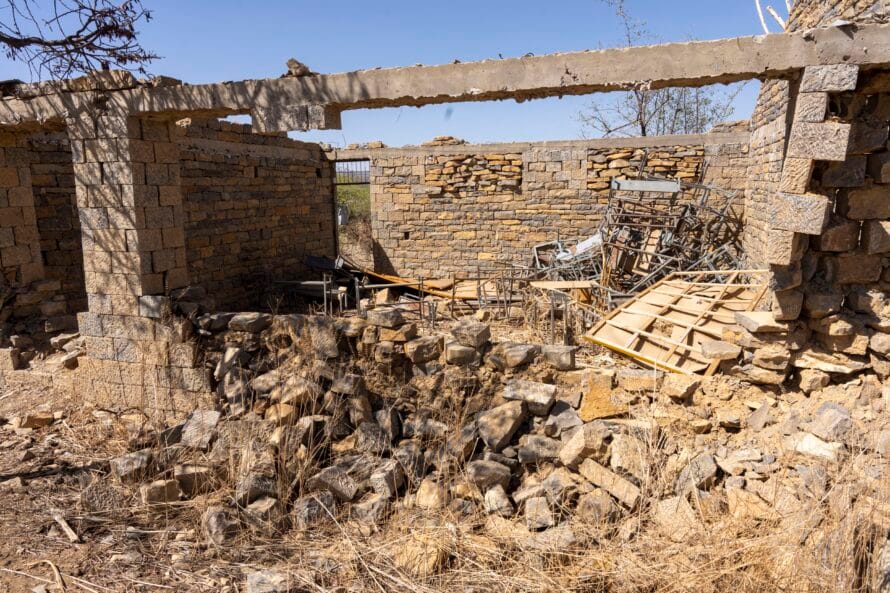
Education across the region has been shattered. Schools were destroyed, occupied by military forces, or repurposed for war efforts.
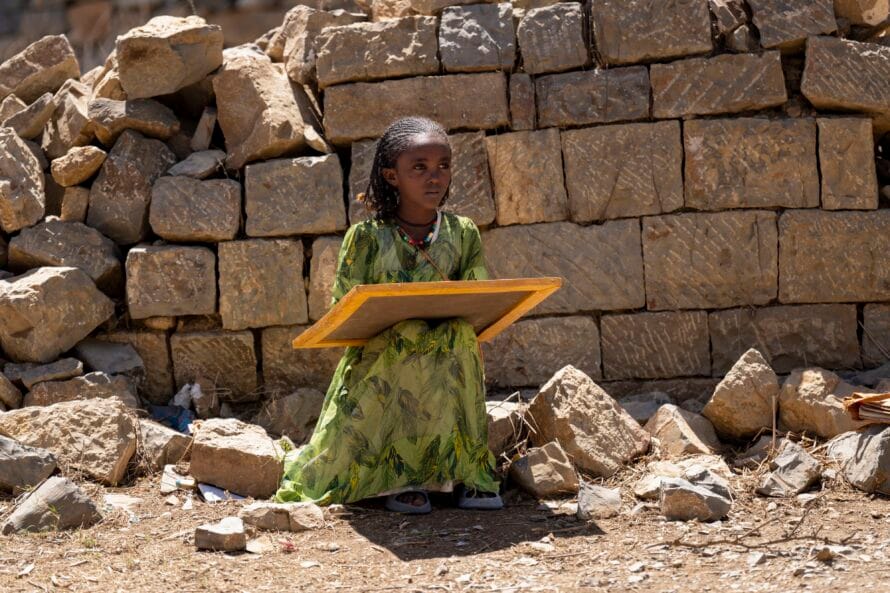
With buildings in ruins, classes were conducted outdoors under trees or alongside crumbling walls. Mini chalkboards replaced exercise books.
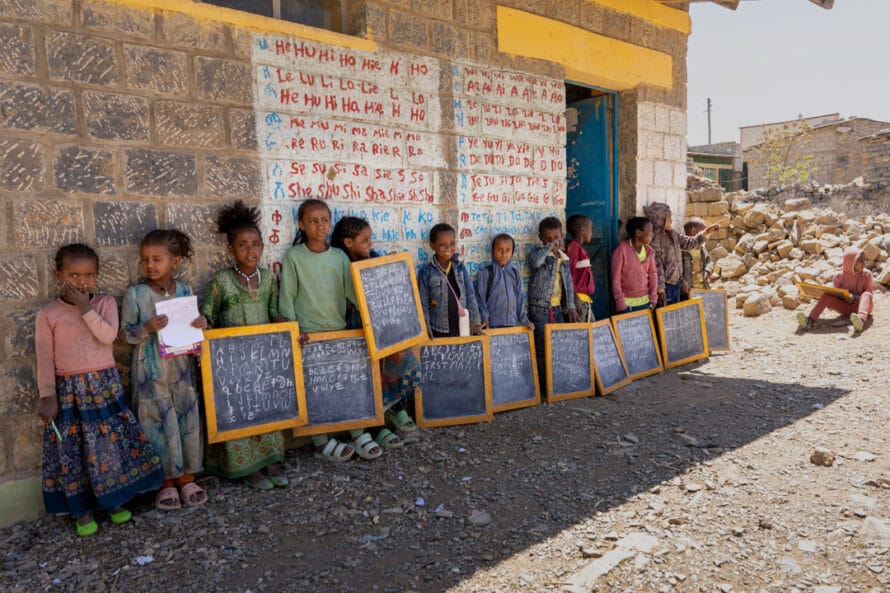
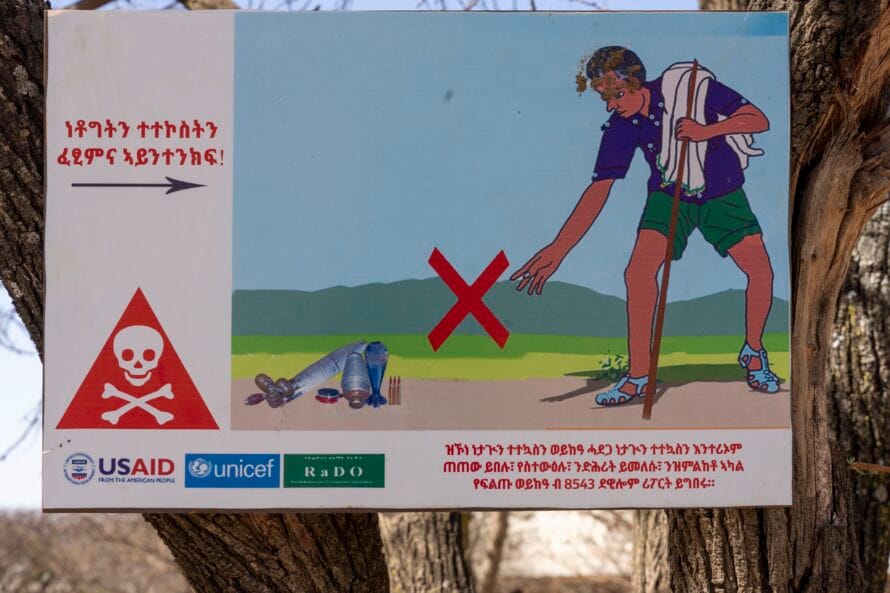
Warning signs about unexploded ordnance were posted around the schoolyard – a chilling reminder that even after war, danger still lingers.
When we visited Romanat Primary School, some students were seated on broken stones under trees or beside remnants of shattered walls.
Two years lost
The war, compounded by the COVID-19 pandemic, has left the region’s education system in disarray. From 2020 onward, around 2.4 million children were out of school for over two years. An estimated 88% of school infrastructure was damaged.
Although schools began reopening in may 2023 following peace negotiations, challenges persist: limited resources, high numbers of children with special needs, and families too impoverished to support their children’s return to learning.
Today, only 40% of school-aged children in Tigray have returned to class. This prolonged disruption increases the risks of child labor, violence, and long-term psychological harm.
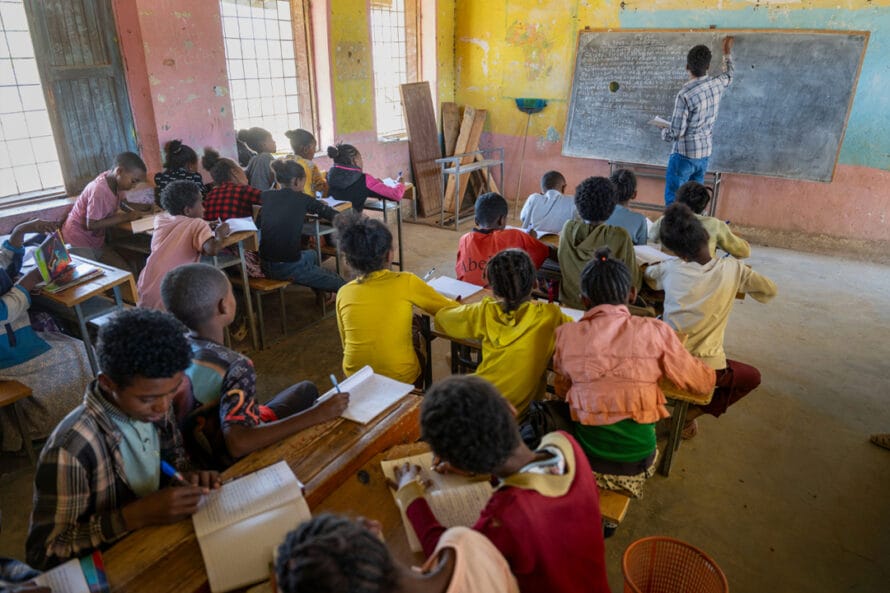
The crisis has also deeply affected teachers. Many left the profession during the pandemic or the conflict. Those who remained are themselves survivors of trauma. According to Dr. Kiros Guesh Abreha, head of the Tigray Education Bureau, four out of five teachers have been traumatized and are in need of psychosocial support. Dr. Kiros made us an urgent appeal:
– I call for your support in our campaign to bring children back to school. The war and the pandemic have caused unimaginable destruction and longlasting harm to the children of Tigray. We must act urgently to restore education, protect their rights, and offer them hope for a better future.
Fida’s new Country Programme supports children in Tigray
In March, Fida launched its new Ethiopia Country Programme in the Tigray region, focusing on strengthening schools and ensuring that children can access quality education despite ongoing challenges.
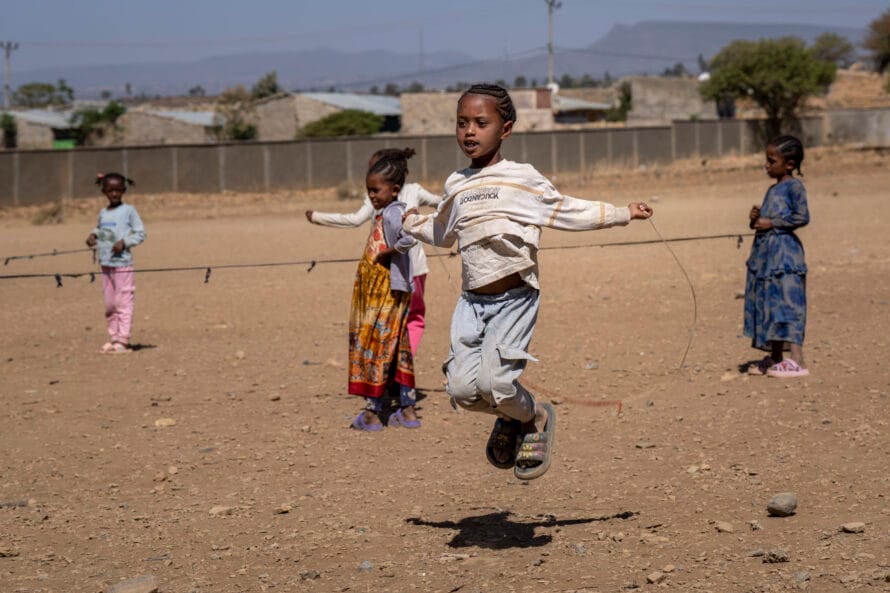
The programme covers government-supported primary and secondary schools in Southeast Tigray. It includes in-service teacher training, learning support clubs for children, and parent association activities for the families of schoolchildren.
Fida’s partner in Tigray is the EGCRD, development and humanitarian organisation of the Genet Church.
The programme also supports household livelihoods by providing training in entrepreneurship and savings at the village level. As family incomes improve, parents are better able to keep their children in school.